Strength Training Workouts for Women Over 40
Practical workout guides for women over 40, organized by where you're starting and what you have available. Every guide includes exercise tables, progression advice, modification notes, and honest safety guidance.
Explore Your Strength Training Goals
Four training focus areas for midlife. Every exercise in each comes with form cues, joint-friendly variations, and honest notes on what the evidence supports.
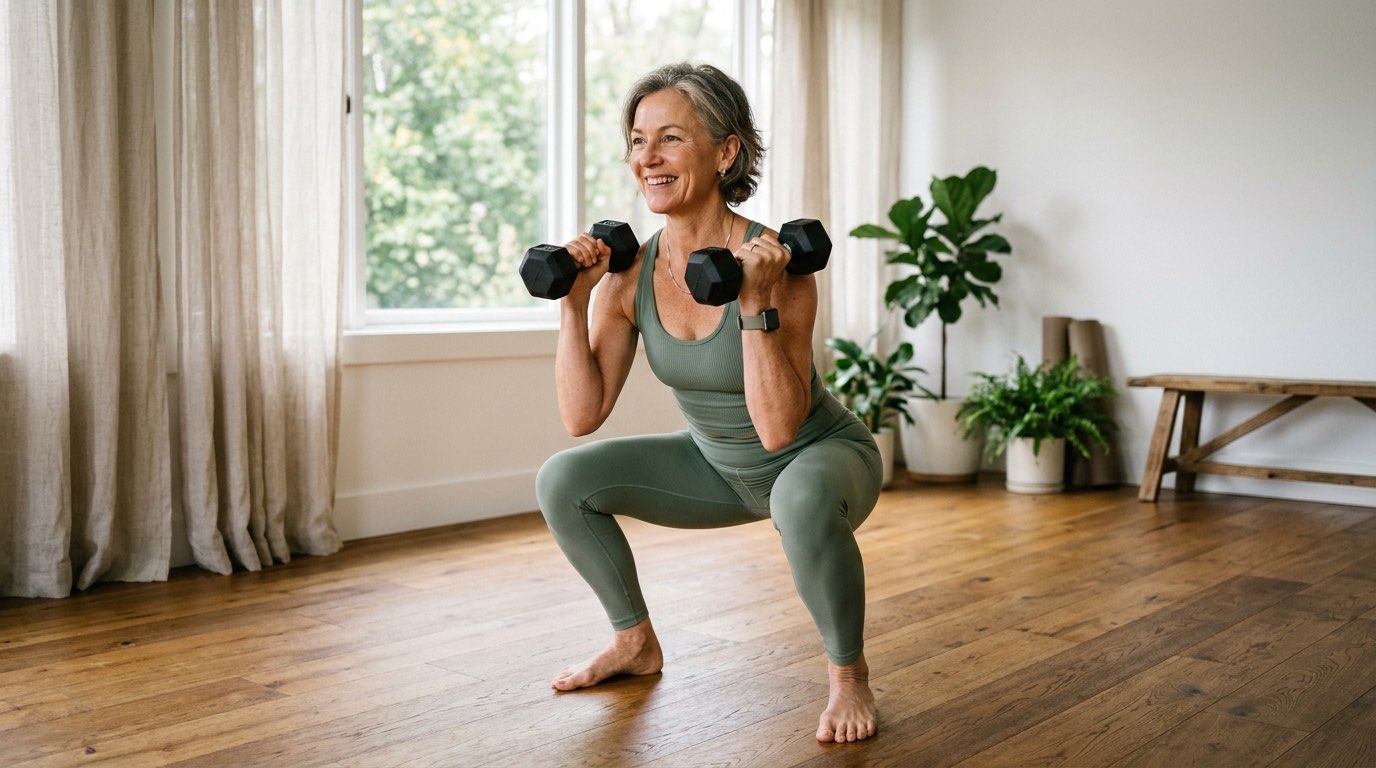
Build and maintain strength over time
Progressive Strength & Muscle
Compound movement patterns — squats, hinges, pushes, pulls, carries — practiced with gradually increasing resistance to help maintain muscle and everyday strength.
- Supports maintenance of muscle mass as you age
- Builds practical strength for daily activities
- Progress can be tracked and adjusted at any level
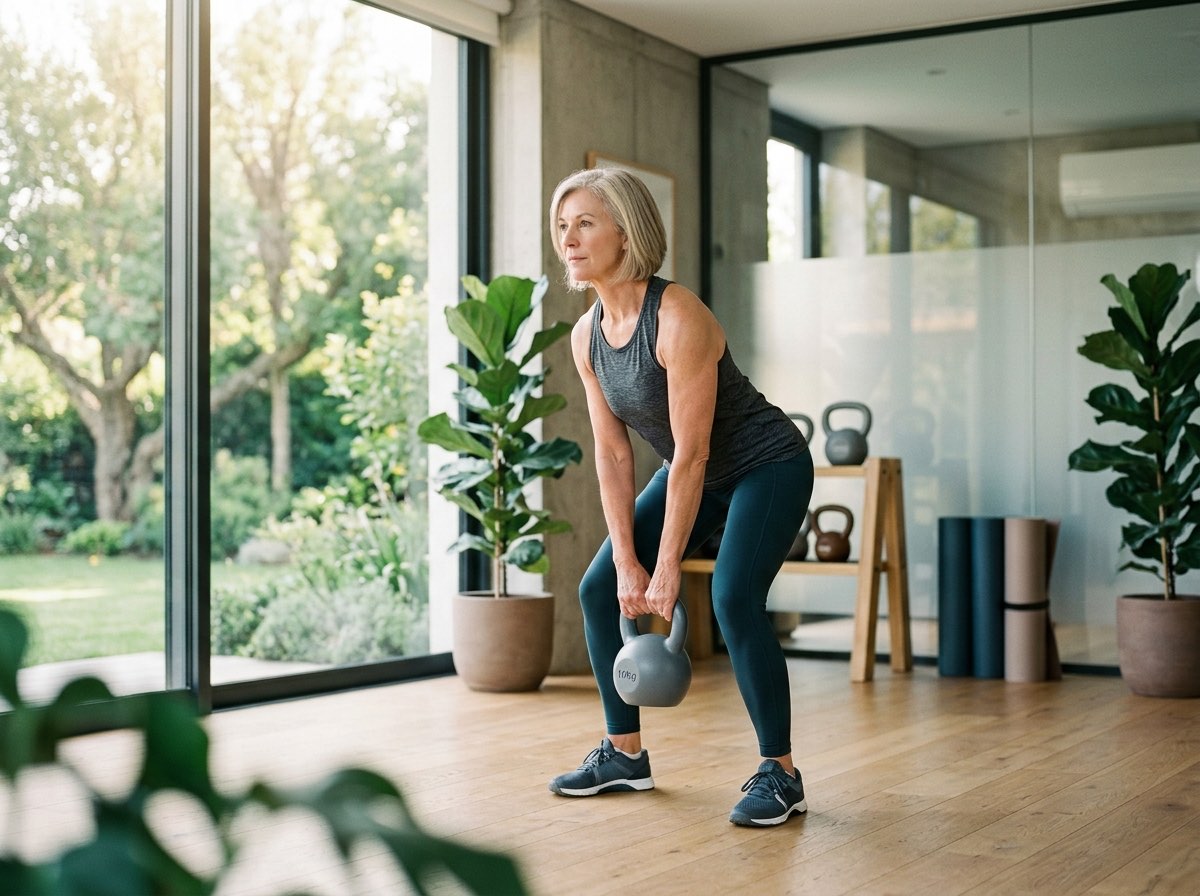
Weight-bearing and resistance work
Bone-Friendly Loading
Weight-bearing exercise and resistance training place healthy mechanical stress on the skeleton. Research — including supervised trials in postmenopausal women — suggests this kind of loading supports bone mineral density when practiced consistently and progressed carefully.
- Weight-bearing loads are associated with better bone density
- Emphasis on spine, hip, and wrist areas of concern
- Balance and control practice supports fall-risk awareness

Move well, stay consistent
Joint Comfort & Mobility
Gentle range-of-motion work and controlled tempos keep training comfortable so you can stay consistent — which matters more than any single workout.
- Supports comfortable, consistent movement
- Maintains range of motion in hips, shoulders, and spine
- Easy to combine with strength days

Programming you can recover from
Steady, Sustainable Training
During perimenopause and menopause, recovery needs vary a lot from person to person. This focus favors moderate, consistent sessions over exhausting ones, with rest days that actually feel restful.
- Sessions sized so you can recover and repeat them
- Balances strength work with easy movement
- Adapts to how you feel week to week
This content is general fitness information, not medical advice, diagnosis, or treatment.