Strength Training for Women Over 50
The exercises don't fundamentally change after 50 — the margins do. Here's what to adjust, a sample training week, and the joint-friendly swaps that keep you training consistently.
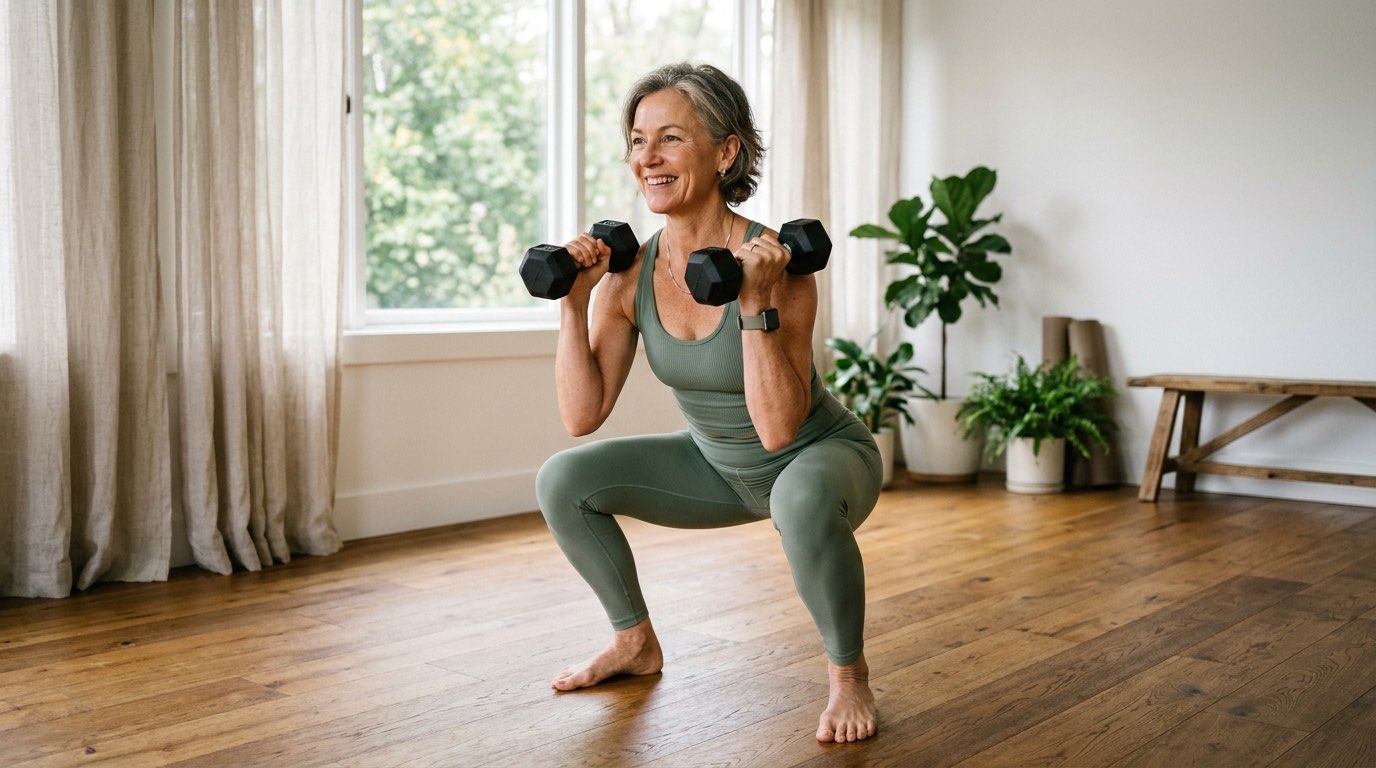
What Actually Changes After 50
The principles of strength training do not have a birthday. Muscles still respond to progressive overload, and the same five movement patterns still cover everything. What genuinely shifts with age:
- Recovery takes a little longer — hard sessions deserve a genuine rest day after them.
- Connective tissue adapts slower than muscle — small, patient load jumps prevent most complaints.
- Warm-ups matter more — five easy minutes of movement before loading pays for itself.
- Bone and balance become priorities — weight-bearing work and single-leg practice earn their place.
None of this is a reason to train less. It is a reason to train with slightly more patience — which, conveniently, is also how you train better at 30.
A Sample Training Week
| Exercise | Sets | Reps / Time | Notes |
|---|---|---|---|
| Mon — Strength A | — | 30–40 min | Squat, hinge, push, pull, carry (see dumbbell guide) |
| Tue — Easy movement | — | 20–30 min walk | Or gentle mobility |
| Wed — Strength B | — | 30–40 min | Different exercises, same patterns |
| Thu — Rest or stroll | — | As feels good | Recovery is part of the program |
| Fri — Balance & mobility | — | 15 min | Heel raises, single-leg stands near a counter |
| Weekend — Active | — | Anything enjoyable | Longer walk, swim, garden, play |
This structure flexes: two strength days can land on any days that suit your week, as long as they are not back-to-back for the same muscle groups.
Exercise Swaps for Sensitive Joints
Discomfort in a joint usually calls for a different variation, not a different hobby. Common, effective swaps:
- Deep squats → box squats to a comfortable height, or wall sits
- Barbell deadlifts → dumbbell kickstand deadlifts or floor glute bridges (a floor-based hinge many people with back sensitivity prefer)
- Overhead press → band pulls or presses within your pain-free range
- Floor push-ups → counter or incline push-ups
- Jumping or running intervals → incline walking, cycling
Slower lowering phases (around three seconds) give joints less surprise and muscles the same work. It is the single easiest adjustment with the biggest comfort payoff.
When to Involve a Professional
Two situations deserve individual advice. First, medical: heart or blood-pressure conditions, diagnosed osteoporosis, recent fractures, joint replacements, or symptoms during exertion. Second, coaching: if you are unsure about technique, a few sessions with a qualified trainer familiar with older clients is one of the best investments in this whole project.
This content is general fitness information, not medical advice, diagnosis, or treatment. Exercise affects everyone differently, and public-health guidance is designed for generally healthy adults. If you have a medical condition (including osteoporosis, heart or blood-pressure conditions, a recent fracture or surgery, or joint replacements), are pregnant, or experience pain, dizziness, or chest discomfort during activity, talk to a qualified health professional before starting or changing a training program.