Dumbbell Workouts for Women Over 40
Three complete dumbbell sessions — full body, upper body, and lower body — with practical guidance on choosing weights and progressing without guessing.
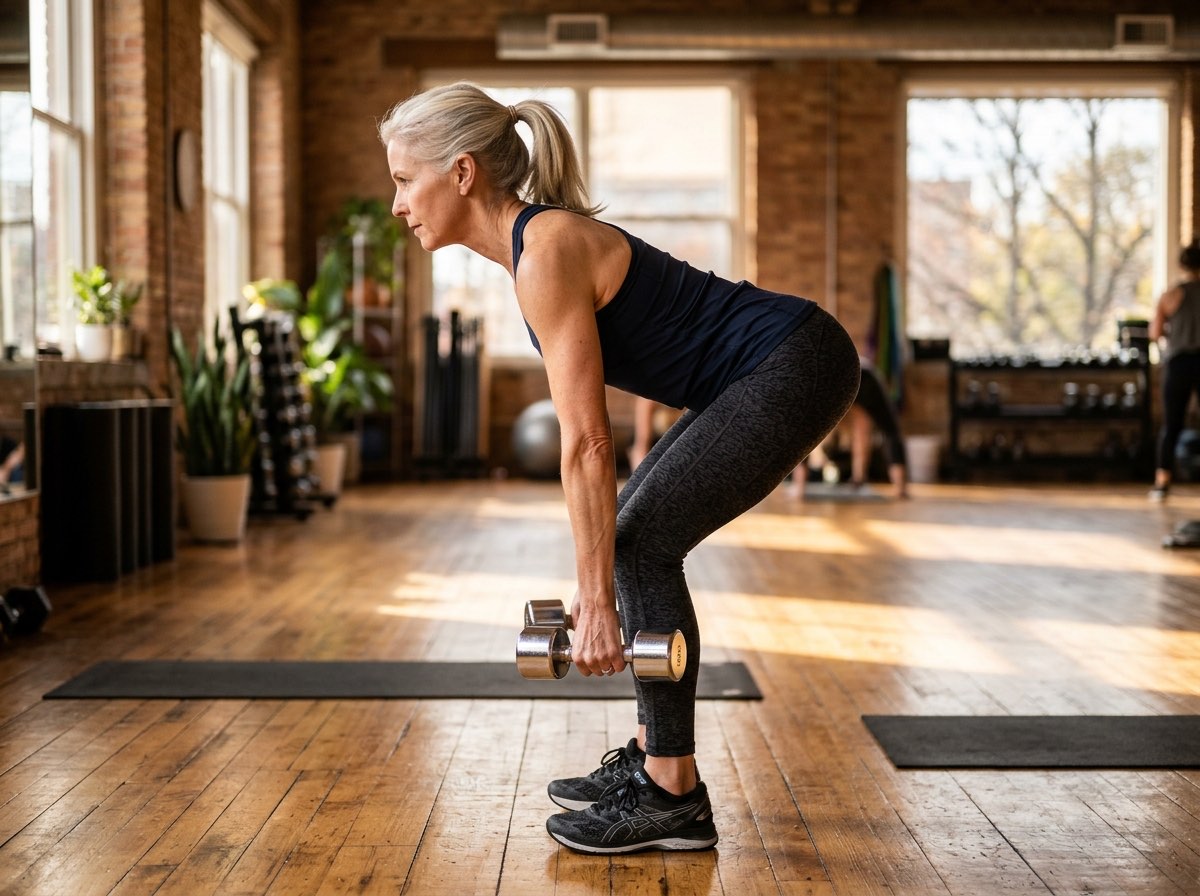
Why Dumbbells Work Well After 40
Dumbbells let each side of the body work on its own, which highlights — and gradually corrects — left/right differences. The range of motion is free, which suits joints that dislike barbell positions. And small load jumps (2–5 lb steps, or adjustable dumbbells) make progressive overload practical without big, risky leaps.
A balanced home setup is simple: two or three pairs of dumbbells (light / medium / heavier), or one adjustable pair, plus a resistance band and something sturdy to step on or lean against.
Workout A: Full Body
| Exercise | Sets | Reps / Time | Notes |
|---|---|---|---|
| Goblet Box Squat | 3 | 8–10 | 3-second lower; touch the box lightly |
| Dumbbell Romanian Deadlift | 3 | 10 | Hips travel back; flat back; stop at shin level |
| Chest-Supported Row | 3 | 10–12 | Incline bench; squeeze shoulder blades |
| Floor or Incline Press | 3 | 8–10 | Floor press is easier on the shoulders |
| Farmer Carry | 3 | 40 sec walk | Steady pace; shoulders down and back |
Workout B: Upper Body Focus
| Exercise | Sets | Reps / Time | Notes |
|---|---|---|---|
| Dumbbell Row | 3 | 10 per side | Hinge position or one knee on a bench |
| Shoulder Press (seated or standing) | 3 | 8–10 | Skip if shoulders complain; band pull-aparts instead |
| Neutral Band Pull to Sternum | 3 | 12 | Light band; pain-free range only |
| Pallof Press | 3 | 10 per side | Resist the band; 2-second hold at extension |
| Suitcase Carry | 3 | 30 sec per side | One dumbbell; stand tall, don't lean |
Workout C: Lower Body Focus
| Exercise | Sets | Reps / Time | Notes |
|---|---|---|---|
| Dumbbell Box Squat | 3 | 10 | Hold dumbbells at your sides |
| Staggered Romanian Deadlift | 3 | 8 per side | Staggered stance; keep loads light and work within a pain-free range |
| Glute Bridge (dumbbell on hips) | 3 | 12 | 2-second hold at the top |
| Wall Sit | 3 | 30–45 sec | Comfortable depth; breathe evenly |
| Heel Raises | 3 | 12–15 | Hold a dumbbell; slow lowers |
Choosing Your Weight — and Progressing
For each exercise, pick the pair that lets you finish every rep with control, where the final 2–3 reps feel genuinely challenging. If you breeze through all sets, go heavier next time. If form breaks down, go lighter. That feedback loop — not a formula — is how weight selection actually works.
Log your weights. Progress after 40 is quiet: it shows up as the medium pair feeling like the light pair, not as dramatic visible change in week two.
This content is general fitness information, not medical advice, diagnosis, or treatment.
What dumbbell weight should a woman over 40 start with?
Are adjustable dumbbells worth it?
How heavy is "too heavy"?
Can dumbbell training support bone health?
New to lifting? Start with the basic patterns first.
How progressive overload and protein actually work.
What loading does for bone density, honestly explained.
Joint-friendly programming for the next decade.