Your Build Muscle & Get Stronger Plan
A general weekly schedule for a intermediate level, 3 sessions per week (35 min each) with dumbbells and bands. Information only — not medical advice.
Your strength focus shapes this plan around compound movements with gradual progression — adding a little weight or a rep when the last set feels comfortable.
You flagged knee sensitivity, so the plan favors higher box squats or wall sits and hinge patterns that keep the knees relatively quiet.
Dumbbells and bands: the plan pairs free-weight basics with band variations so you can progress without a full rack.
3 strength days per week, with the remaining days used for easy walking or mobility. Strength days are spaced so the same muscle groups get at least a day between sessions.
Your 7-Day Weekly Schedule
Select a day below to explore assigned movements, demonstration photos, rep tempos, and joint alternatives.
Day 1: Lower Body Strength
A 35-minute session built around your "Build Muscle & Get Stronger" focus, with 60s rest between sets. Adjust loads so every rep stays controlled.
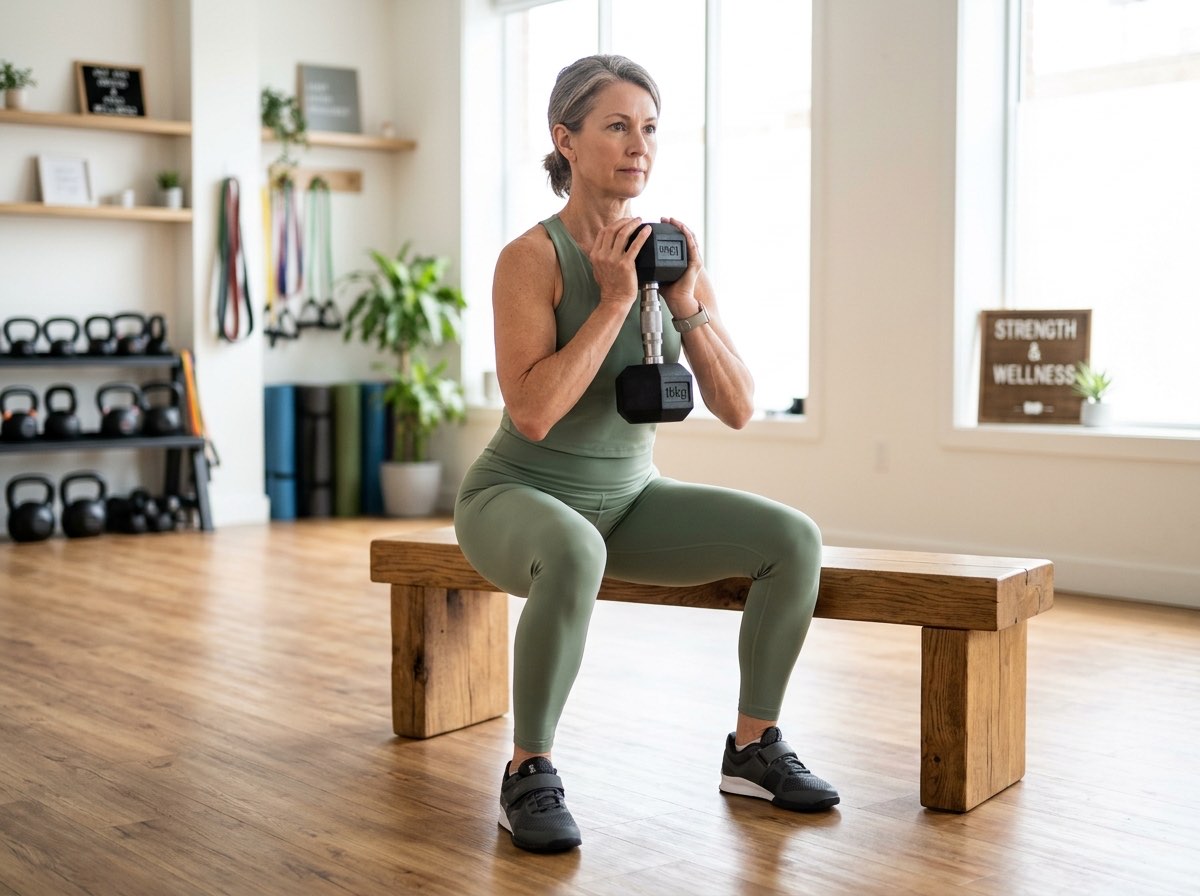
Wall Sit (knee-comfortable angle)
A static hold at a comfortable depth. Because the knee stays still, many people with sensitive knees tolerate it well.
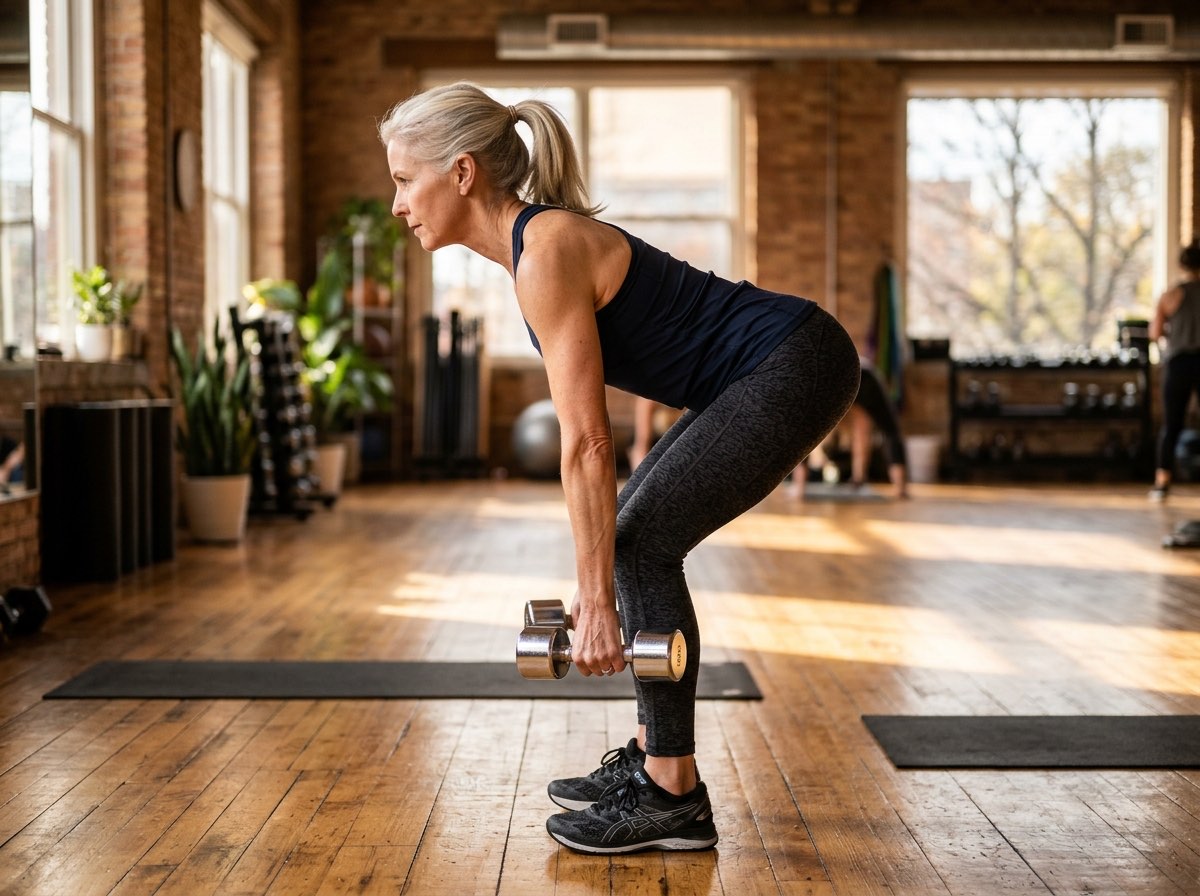
Dumbbell Romanian Deadlift (Hip Hinge)
A hip-hinge pattern that loads the back of the body — hamstrings, glutes, and the muscles along the spine — while keeping the knees relatively quiet.
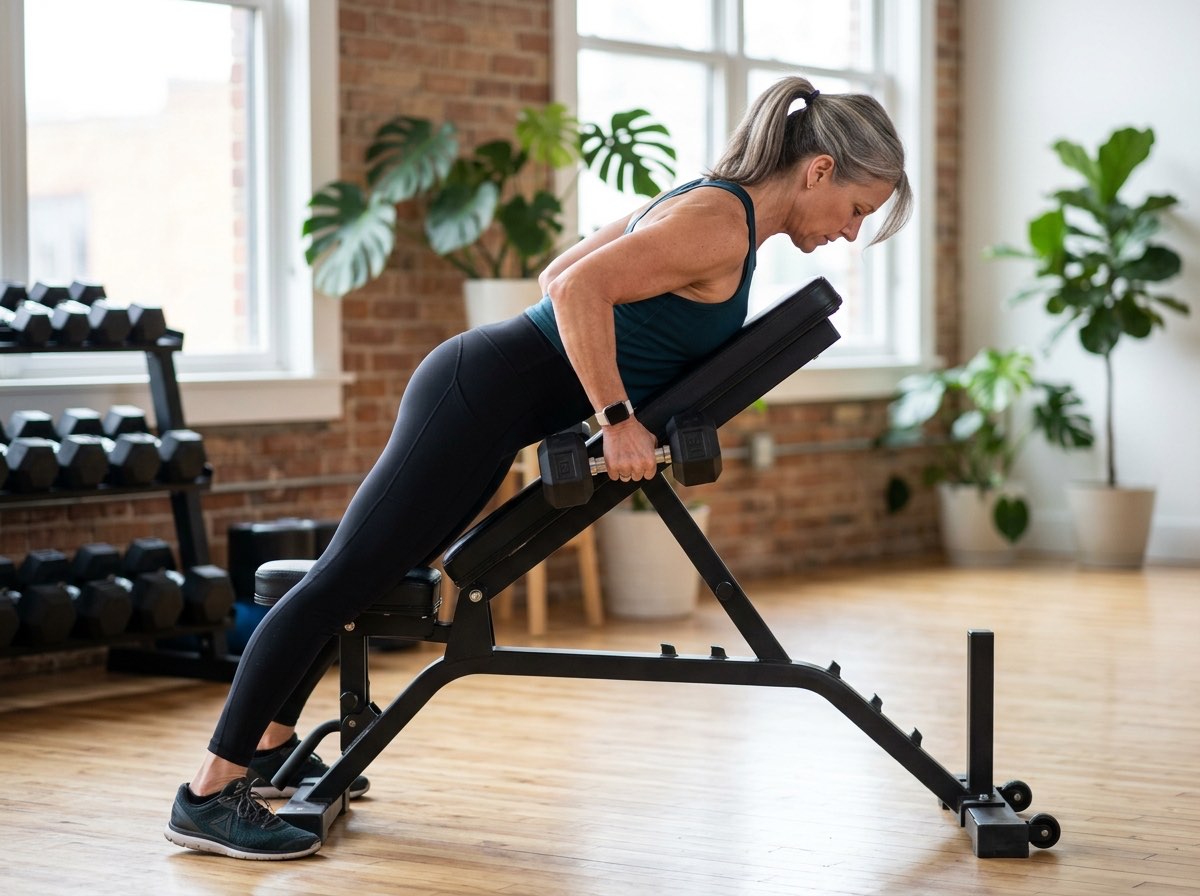
Chest-Supported Neutral Grip Row
A row with the torso supported against an incline bench. Supporting the chest takes the lower back out of the equation and makes it easier to feel the upper back working.

Pallof Press (Anti-Rotation)
A band exercise where the goal is to resist the band's pull rather than twist. It trains the trunk to stay steady — useful for almost everything else you lift or carry.
Need to change your equipment or frequency?
You can retake the assessment anytime to adapt for travel, recovering joints, or new gym access.
This content is general fitness information, not medical advice, diagnosis, or treatment. Exercise affects everyone differently, and public-health guidance is designed for generally healthy adults. If you have a medical condition (including osteoporosis, heart or blood-pressure conditions, a recent fracture or surgery, or joint replacements), are pregnant, or experience pain, dizziness, or chest discomfort during activity, talk to a qualified health professional before starting or changing a training program.