Strength Training for Women Over 40: How to Build Muscle and Stay Strong
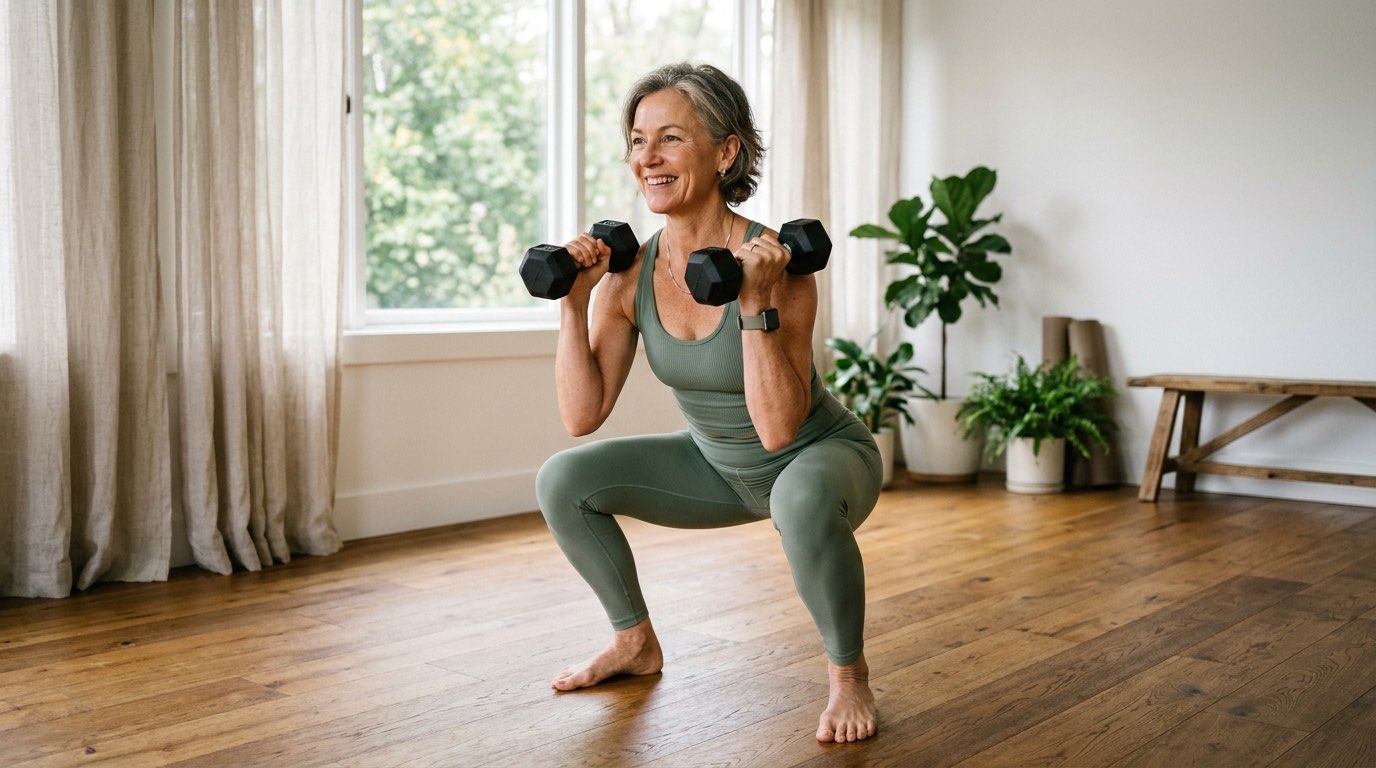
If you are over 40 and wondering whether strength training is worth your time: it is one of the most useful things you can do for your long-term health — and you can start at almost any fitness level.
What the Research Shows
The World Health Organization recommends that all adults do muscle-strengthening activity involving major muscle groups on at least two days per week, alongside regular aerobic activity. That recommendation rests on a large body of research linking resistance training to strength, mobility, and metabolic health.
Muscle mass and strength tend to decline gradually with age — a process researchers call sarcopenia. The decline is real but not fixed: muscle remains trainable throughout life, and studies of resistance training in older adults consistently show meaningful strength improvements, including in people who start in their 70s and beyond.
An honest note on limits: strength training supports health in many ways, but it is not a guarantee against injury, illness, or every age-related change. Think of it as one of the highest-value habits available to you, not a promise.
Practical Recommendations
Almost every useful strength exercise is a variation of one of five patterns: squat (bending hips and knees together, like sitting down), hinge (bending at the hips with a fairly flat back), push (pressing away), pull (drawing toward you), and carry (walking with weight). Learn one exercise per pattern and you can build a sensible workout anywhere.
A simple starting week is two sessions of 30–40 minutes, each with one exercise per pattern, 2–3 sets of 8–12 repetitions, resting about a minute between sets. Choose loads you can control with good form — the last few reps should feel like real work.
Progressive overload is the engine of results: gradually do a little more over time — more weight, another rep, or a slightly harder variation — and let your body adapt between sessions.
Example Workout
This beginner session covers all five patterns in about 30 minutes. Do it twice this week, on non-consecutive days.
| Exercise | Sets | Reps / Time | Notes |
|---|---|---|---|
| Chair Squat | 2 | 10 slow reps | Sit back to a sturdy chair; stand tall |
| Glute Bridge | 2 | 12 reps | 2-second pause at the top |
| Wall or Counter Push-Up | 2 | 8–12 reps | Lower the surface to progress |
| Band Row | 2 | 10–12 reps | Light band; squeeze shoulder blades |
| Farmer Carry | 2 | 30 sec walk | Light weights or full water jugs |
Rest about 60 seconds between sets. If any exercise causes sharp pain, stop and use one of the easier variations from our beginner guide.
Common Mistakes
Doing too much in week one is the most common — and most expensive — beginner mistake. The soreness and fatigue that follow often end training programs by week three. Start with less than feels necessary and let consistency do the work.
The others worth avoiding: chasing soreness as a sign of progress (it is not required for progress), switching exercises every week (progression needs repetition), not logging your weights (small, visible increases are what build muscle), and comparing your timeline to anyone else's.
When to Seek Professional Guidance
Talk to a doctor or physical therapist before starting if you have diagnosed osteoporosis, heart or blood-pressure conditions, a recent fracture or surgery, joint replacements, or symptoms such as dizziness or chest discomfort during exertion. And if you are unsure about technique, a session or two with a qualified trainer is a worthwhile investment — it is cheaper than months of practicing mistakes.
Frequently Asked Questions
How often should a woman over 40 strength train?
Can I start strength training at 50, 60, or older?
Do I need a gym membership?
References
- [1]World Health Organization — Physical activity fact sheet (recommends muscle-strengthening activity on ≥2 days/week for adults).
- [2]WHO Guidelines on physical activity and sedentary behaviour (2020).
- [3]Westcott, W. L. (2012). Resistance training is medicine: effects of strength training on health. Current Sports Medicine Reports, 11(4), 209–216.
- [4]National Institute on Aging — Exercise and physical activity resources for older adults.
This content is general fitness information, not medical advice, diagnosis, or treatment. Exercise affects everyone differently, and public-health guidance is designed for generally healthy adults. If you have a medical condition (including osteoporosis, heart or blood-pressure conditions, a recent fracture or surgery, or joint replacements), are pregnant, or experience pain, dizziness, or chest discomfort during activity, talk to a qualified health professional before starting or changing a training program.
Put These Findings into Practice
Our free planner turns these principles into a weekly schedule matched to your equipment, schedule, and joint needs.